
Botswana Diamonds Strengthens Asset Base and Plans for Value Growth in H2
Despite facing challenges over the past year, Botswana Diamonds, a company listed on the Aim stock exchange, has made notable strides in its strategic expansion initiatives.
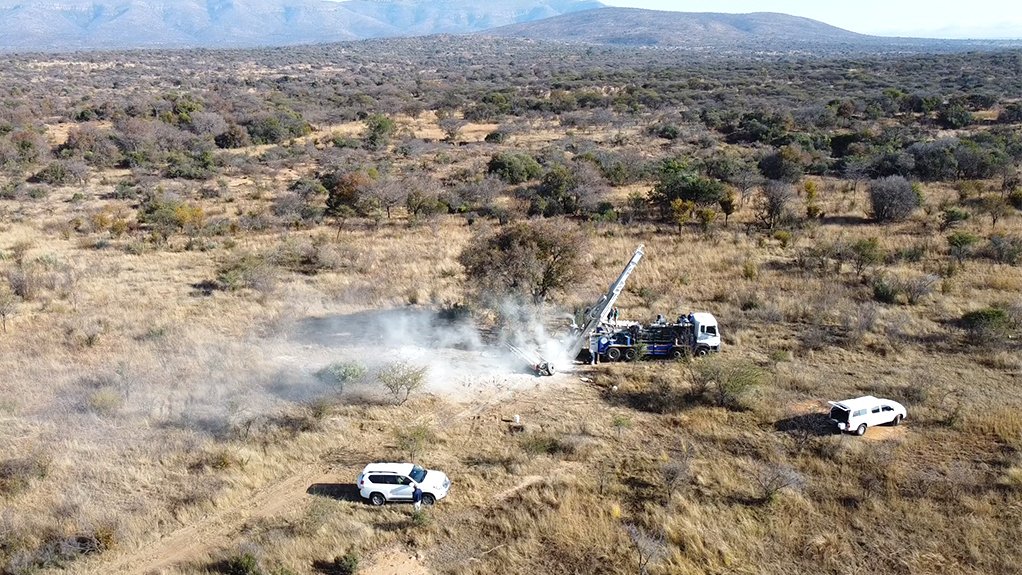
In a review of its performance for the financial year ending June 30 and the subsequent six months of its 2026 fiscal year, Botswana Diamonds highlighted its strengthened asset base for diamond and critical minerals exploration. The company has embraced advanced technologies as it continues to develop its Thorny River and Marsfontein projects in South Africa, alongside the KX36, Sekaka, and Maibwe projects in Botswana.
“With a renewed sense of confidence, a diversified portfolio, and a clear roadmap for value creation, we are poised for the next phase of our development,” stated Chairperson John Teeling.
The diamond industry’s global landscape saw subdued consumer spending and ongoing uncertainty across key markets this year.
Teeling noted that demand for diamonds in China has been lackluster, while jewellery sales in the U.S., the largest diamond jewellery market, faced declines due to inflationary pressures and cautious consumer behavior.
Indian diamond polishing activities slowed, primarily due to high inventory levels and reduced demand from the U.S. Major producers have implemented temporary production cuts and paused sales to manage surplus stock and stabilize prices.
The influx of lab-grown diamonds further complicated the situation, exerting downward pressure on prices in the lower to mid-value segments of the natural diamond market. However, Botswana Diamonds focuses on high-value diamonds, which continue to exhibit strong consumer preferences and maintain pricing stability.
Teeling mentioned that manufacturing activity for diamonds has resumed as inventory levels have stabilized, although global demand remains inconsistent.
He is optimistic about the long-term supply fundamentals for diamonds, citing that many alluvial and small-scale mining operations globally are uneconomical, which limits natural supply. Major diamond producers are nearing peak output from existing mines, and there are few new large-scale kimberlite mines in development.
These factors reinforce Botswana Diamonds’ strategy of prioritizing value over volume, targeting geologically promising assets in stable mining jurisdictions.
INNOVATIVE APPROACHES
This year marked a significant initiative for Botswana Diamonds through its collaboration with Planetary AI, which leverages advanced semantic AI to analyze extensive, disparate mining data accumulated over the decades.
This innovative technology aids in uncovering previously underestimated mineralization potential throughout Botswana.
The partnership’s outcomes include the identification of seven new kimberlite targets in previously unexplored areas, the discovery of 11 high-quality critical metal targets—including copper, nickel, zinc, silver, and gold—and the integration of over 375,000 km of airborne geophysical surveys alongside 228,000 soil samples and 32,000 drill logs.
These advancements represent one of the most sophisticated applications of AI in mineral exploration within Botswana, establishing Botswana Diamonds as a trailblazer in data-driven exploration on a large scale.
“This initiative has paved the way for new opportunities, enhanced our targeting pipeline, and reduced risks in the early stages of exploration,” affirms Teeling.
EXPANDING BEYOND DIAMONDS
The company has submitted applications for eight prospecting licenses covering an area of 6,550 km² across Botswana, with the goal of targeting copper, nickel, platinum group metals, lead, zinc, silver, and gold.
These applications were driven by the identification of several mineralized corridors, some of which bear geological similarities to known promising areas in neighboring countries. Given that exploration for many of these commodities in Botswana has been limited, the company sees a first-mover advantage in this sector.
“We are optimistic about obtaining these licenses, after which we will initiate fieldwork immediately. We are in talks with potential partners who recognize the strategic significance of our portfolio,” Teeling added.
He emphasized that this evolution doesn’t signal a departure from the company’s roots but rather a means of leveraging them. Botswana remains underexplored for many resources, despite having a robust mining code, political stability, and a comprehensive geological database.
Teeling further noted that Botswana Diamonds’ long-standing presence, coupled with specialized knowledge and expertise, positions the company to seize these emerging opportunities.
The diversification into critical minerals is anchored in solid data, thorough analysis, and the integration of AI, allowing Botswana Diamonds to glean new value from over two decades of accumulated geoscientific data.
“We believe that we align with government policy, balancing continued diamond exploration while diversifying into other valuable mineral resources that contribute to Botswana’s future economic growth.”
What are your thoughts on Botswana Diamonds’ strategic expansion and diversification efforts?

Introduction A significant development in global connectivity is underway, as a new cable system aims to link India, the Middle Read more
Expansion Plans for Bharti Airtel in Africa Bharti Airtel is reportedly eyeing a potential acquisition of a smaller telecommunications operator Read more

Seacom's Major Submarine Cable Network Upgrade Seacom is embarking on a significant enhancement of its submarine cable network along the Read more

## Jolla's Expansion into the African Market Jolla has recently unveiled plans to establish a Sailfish OS ecosystem in Africa, Read more