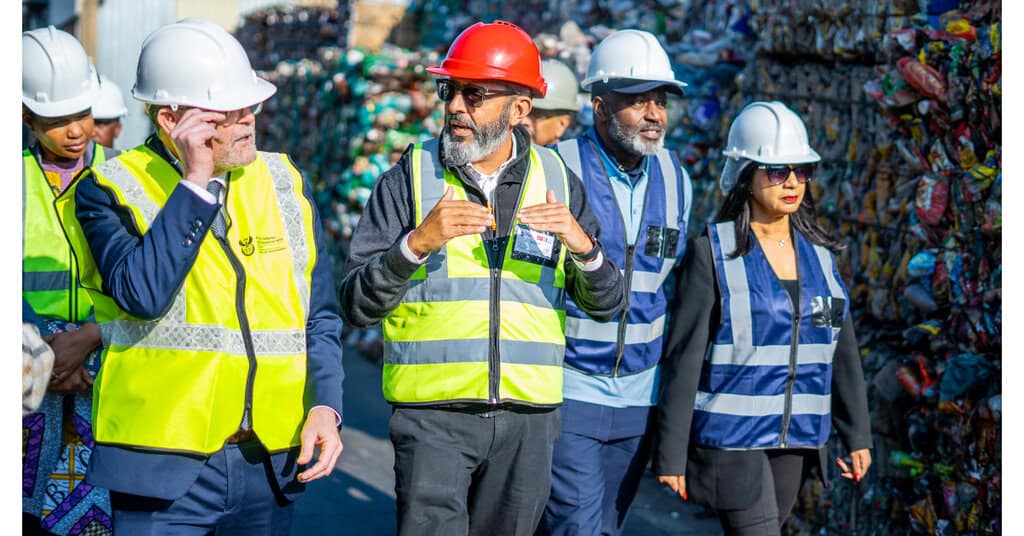
Extrupet is paving the way for PET recycling in South Africa.
By Adrian Ephraim
Recent discussions in Geneva about global plastic pollution may not have resulted in a treaty, but for Chandru Wadhwani, the leader of Extrupet, there is a glimmer of hope. “While we may not have a formal agreement, awareness around plastic pollution is finally gaining momentum,” he notes.
Founded in 2000, Extrupet has embraced the belief that scalability is crucial in recycling efforts. “Achieving critical mass is necessary,” Wadhwani explains. “It helps us access the funds needed for investment and provides the most cost-effective solutions.”
The need for effective PET recycling is particularly urgent as global plastic production is expected to increase by 70% by 2040. Even without an overarching treaty, South Africa’s recycling sector remains proactive.
Extrupet’s facility in the Western Cape serves as a prime example of their localized strategy. Focused on food-grade production, this plant has successfully minimized transportation costs while creating local jobs—benefitting both the community and the business.
In spite of global challenges, the PET recycling industry in South Africa boasts impressive collection rates between 64% and 65%, far exceeding the global average of 9%. Wadhwani attributes much of this success to the inherent properties of PET as a polymer.
“PET stands out because it has fewer grades,” he adds. “Whether it’s a soft drink bottle, a juice bottle, or a peanut butter jar, they’re all made from the same base material.”
This consistency helps make PET recycling easier and more economically viable, unlike other plastics that face complications from varying designs and contamination.
After the introduction of new recycling regulations in South Africa in 2021, some industry players opted for unsustainably low fees. Wadhwani isn’t convinced this is a viable strategy. “Lower fees may seem appealing,” he states, “but are they effective if targets are not met?”
He expresses concern over some Producer Responsibility Organizations (PROs) making unrealistic promises based on reduced costs. “These tactics ultimately leave brand owners without the compliance needed under Section-18 EPR legislation,” he explains.
Extrupet aims to collaborate with PROs that focus on meeting regulatory targets, even if it comes with higher fees. This commitment supports their long-term sustainability objectives.
Although governmental support may have waned, Extrupet continues to expand beyond South Africa. With operations in Mauritius since 2004 and plans for Nigeria and East Africa, they remain focused. “Financial constraints are impacting everyone,” Wadhwani says. “Environmental issues often take a back seat in tough times.”
The collapse of international treaty talks underscored the tug-of-war between environmental initiatives and economic development. For instance, nations like India argue that limiting plastic packaging could exacerbate food waste and hunger.
Wadhwani highlights the complexity of the issue: “Without plastic packaging, essential food deliveries to millions would suffer.” He points out that reducing plastic usage could have serious repercussions for public health and the economy.
This “Faustian paradox” reflects the difficult balance the developing world faces regarding reliance on plastic packaging solutions.
“It’s truly a catch-22,” he concedes. “Cut back on plastic, and the result could be increased societal challenges.”
In the face of these challenges, Wadhwani remains optimistic about the future. He believes the path to success lies in designing products for true recyclability. “We need to ensure markets are required to purchase recycled materials,” he stresses. “Get those elements right, and everything else will follow.”
While the world anticipates its next opportunity for a global plastic agreement, local initiatives like those from Extrupet demonstrate that grassroots efforts and strategic business practices can advance recycling efforts significantly.
What are your thoughts on the future of PET recycling in your community?
Rewrite the following article with the following instructions: ✅ Make it plagiarism-free and 100% unique…
Rewrite the following article with the following instructions: ✅ Make it plagiarism-free and 100% unique…
Rewrite the following article with the following instructions: ✅ Make it plagiarism-free and 100% unique…
Rewrite the following article with the following instructions: ✅ Make it plagiarism-free and 100% unique…
Rewrite the following article with the following instructions: ✅ Make it plagiarism-free and 100% unique…
Rewrite the following article with the following instructions: ✅ Make it plagiarism-free and 100% unique…